
How to Turn Off App Tracking on Android: Protecting your privacy on Android has become just as important as choosing the right phone or the right apps. With most apps collecting data in one way or another, turning off app tracking on Android is one of the most effective steps you can take to control how much of your digital life gets monitored, recorded, or used for personalized ads.
While Android has always offered a solid set of privacy tools, the newer versions have made it much easier to see what apps are doing in the background, which permissions they use, and how often they access sensitive data like your camera, microphone, or location.
This guide explains everything in detail. You’ll understand how app tracking works, how to turn it off completely, how to reduce background activity, and how to stop Google from tracking your searches and web activity.
The goal is to give you full control over your phone so that only the apps you trust can access your data. The steps below work across most Android phones in 2026, including Samsung, OnePlus, Pixel, Vivo, Oppo, and others.
Friends, throughout the guide, the main keyword How to Turn Off App Tracking on Android has been added naturally, along with related queries requested by you for SEO.
Also Read: How to Enable Notification History on Android and Recover Missed Alerts (2026 Guide)
Why App Tracking Happens on Android (And Why It Matters)
As we know- Most apps track users for two main reasons: personalized advertising and analytics. Advertising IDs, location data, browsing history, installed apps, daily habits, and even physical movement patterns can be used to build detailed profiles. While some data helps apps function better, a lot of it is collected quietly in the background without users noticing.
The concern is no longer about a single app having your data. The real issue is how different apps and ad networks combine information to identify patterns, predict behavior, and create long-term user profiles. This becomes more noticeable when you see shopping ads everywhere after searching something once or when you get recommendations that feel “too accurate.”
Turning off app tracking on Android will not break your apps, but it will significantly reduce the amount of data they receive about you.
Android now gives users more control through the Privacy Dashboard, permission controls, advertising ID resets, and Google Account activity settings. The combination of these tools is powerful enough to create a much safer environment without affecting general usage.
How to Turn Off App Tracking on Android (Complete Guide)
To completely turn off or minimize app tracking on Android, you need to configure Google Account activity, reset your Advertising ID, restrict app permissions, stop background scanning, and disable system-level data sharing. Let’s break down every step in detail.
1. Manage Your Google Account Activity and Advertising ID

If you care about stopping tracking on Android, your Google Account is the first thing you need to modify because most tracking happens through Google’s services. Almost every Android app uses Google APIs, so Google’s tracking system becomes the center point.
Reset or Delete Your Advertising ID
Your Advertising ID is a unique identifier that apps use to track your behavior for ad personalization. Even if you deny permissions, this ID can still be used to build behavioral patterns.
How to reset or delete your Advertising ID:
- Open Settings
- Tap Security & privacy or Privacy
- Select Privacy controls
- Tap Ads
- Choose Delete advertising ID
- Confirm your action
Once deleted, your Advertising ID becomes a string of zeros. Apps can no longer use it to build or update your profile. This is one of the strongest steps in the entire process.
Turn Off Google Web & App Activity
If you ever wondered how to turn off Google tracking on Android, this is the most important section. Google logs your actions across apps, searches, voice commands, websites, Maps, and even background activity.
Steps to disable Web & App Activity:
- Go to Settings
- Tap Google
- Select Manage your Google Account
- Go to Data & privacy
- Under History settings, tap Web & App Activity
- Turn it Off
- You can also choose Turn off and delete activity for a complete reset
Once turned off, Google stops collecting search activity, location-related history, and usage information from its services.
Stop Google Shared Data Personalization
This option controls how Google uses information from one app (for example, Gmail) to personalize results in other apps (like Maps or YouTube).
Steps:
- Open Settings > Google > All Services
- Tap Personalize using shared data
- Turn off the toggles for apps you don’t want linked
This cuts cross-app tracking inside the Google ecosystem.
2. Control App Permissions Manually
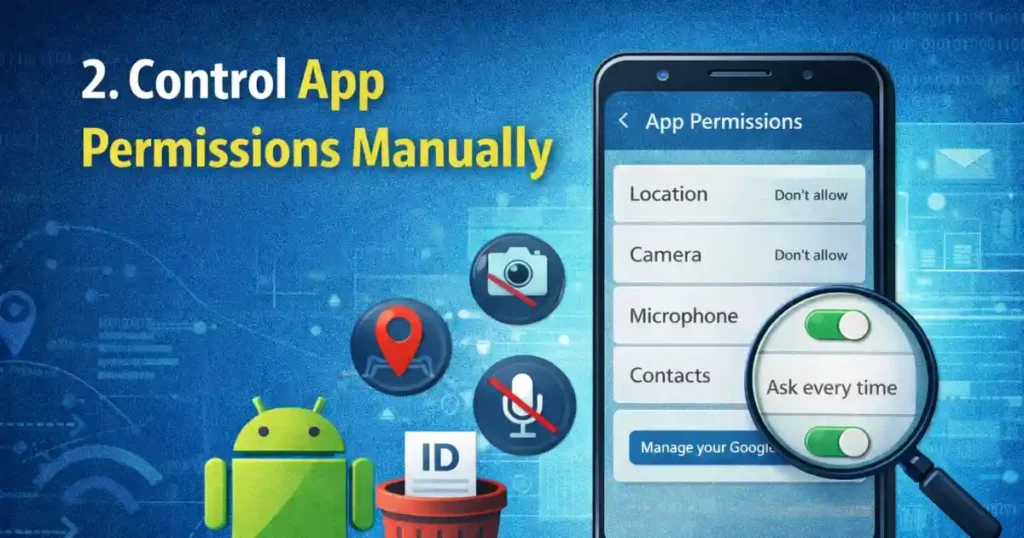
Permissions are the core of app tracking. Apps cannot access your camera, mic, contacts, photos, or location unless you allow them. Android’s newer versions make it easier to see exactly what each app is doing.
Use the Privacy Dashboard (Android 12+)
The Privacy Dashboard gives you a timeline of which apps accessed sensitive permissions in the last 24 hours or 7 days.
Steps to use it:
- Open Settings
- Tap Security & privacy
- Select Privacy dashboard
- Tap categories like Location, Camera, Microphone, Contacts
- Select an app and change the permission to:
- Don’t allow
- Ask every time
Review Individual App Permissions
Steps:
- Open Settings > Apps
- Select any app
- Tap Permissions
- Turn off or modify access
Focus on:
- Location
- Camera
- Microphone
- Contacts
- Files & media
- Nearby devices
Manage Location Permissions Separately
Location is one of the most misused permissions.
You can:
- Allow only while using the app
- Allow once
- Deny completely
- Turn off precise location
If you want maximum privacy, avoid giving background location access unless absolutely necessary.
3. Adjust System-Level Privacy Controls

Beyond app permissions, Android also sends diagnostic and usage data to Google and your phone manufacturer.
Disable Usage & Diagnostics
This stops your phone from sending performance reports, crash logs, and device usage details.
Steps:
- Open Settings > Google > All Services
- Tap Usage & diagnostics
- Turn it Off
Disable Wi-Fi and Bluetooth Scanning
Even with Wi-Fi or Bluetooth turned off, scanning features can still track nearby networks and devices.
To turn them off:
- Go to Settings > Location > Location services
- Disable Wi-Fi scanning
- Disable Bluetooth scanning
This prevents your phone from pinging nearby hotspots or beacons that could be used to track your movements.
Turn On Do Not Track in Chrome
Even though not all websites respect it, enabling Do Not Track helps reduce data collection.
- Open Chrome
- Tap More
- Go to Settings > Privacy and security
- Turn on Send a “Do Not Track” request
4. Use Tools That Block Tracking Automatically
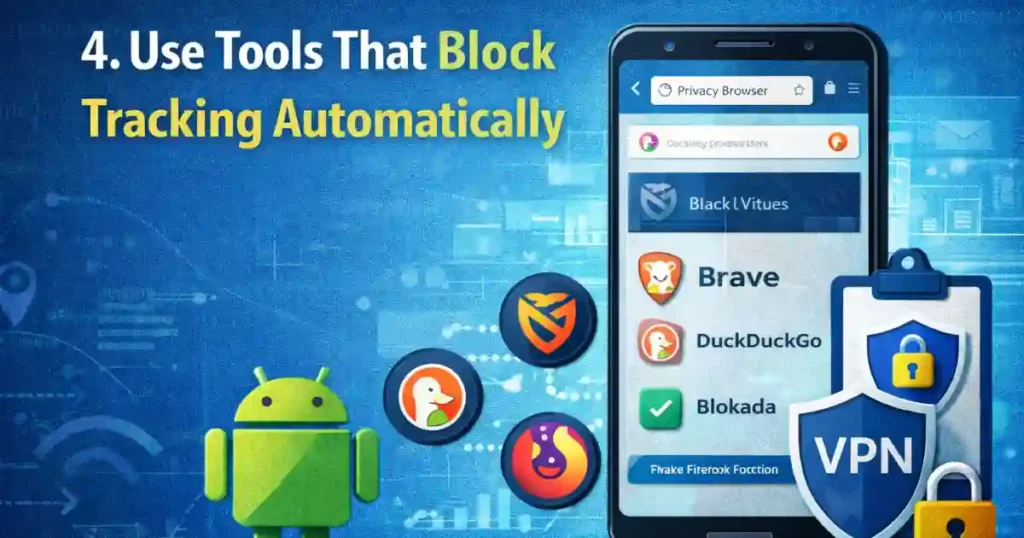
Even after turning off tracking manually, third-party tools can offer an extra layer of protection.
Privacy-Focused Browsers
- Brave
- DuckDuckGo Browser
- Firefox Focus
These block hidden trackers automatically.
Tracker Blocking Apps
- DuckDuckGo App Tracking Protection
- Blokada (open-source)
These apps show you which apps tried to access trackers behind the scenes.
Use a Reputable VPN
A VPN hides your IP address, making it harder for apps and websites to create a location-based profile of you.
5. Quick Checklist to Turn Off App Tracking Completely
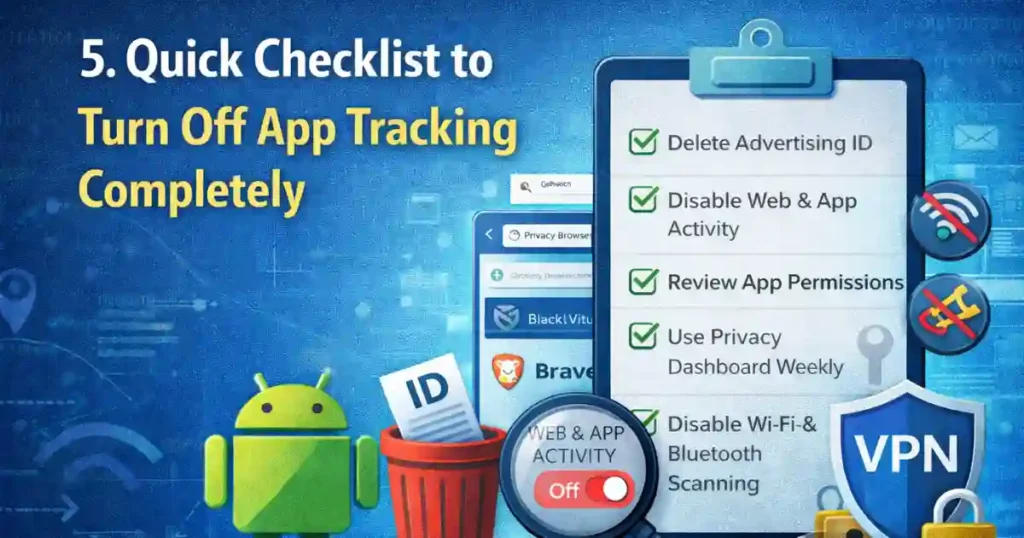
- Delete your Advertising ID
- Disable Web & App Activity
- Review app permissions
- Use Privacy Dashboard weekly
- Turn off usage & diagnostics
- Disable Wi-Fi and Bluetooth scanning
- Enable Do Not Track in Chrome
- Use privacy browsers or blockers
Following all steps ensures maximum protection without affecting essential functionality.
Also Read: How to Use Nearby Share to Send Files to Windows Without Installing Extra Apps
How to Turn Off App Tracking on Android for Better Privacy iPhone
If you’re switching from iPhone or want to compare how things work, the process is slightly different. iPhones use “App Tracking Transparency,” which pops up permission windows whenever an app wants to track your activity across other apps and websites. Android doesn’t offer a single pop-up system like iPhone, but with tools like Advertising ID deletion, permission control, and Privacy Dashboard, you can achieve the same level of protection. The idea is similar: limit identifiers, deny unnecessary permissions, and stop background tracking.
How to Turn On App Tracking on Android
If you previously disabled tracking and want to turn it back on for personalization or better recommendations:
- Enable Web & App Activity under Google Account settings
- Restore your Advertising ID in the Ads menu
- Grant needed permissions like location or microphone
- Turn on Wi-Fi and Bluetooth scanning if required
- Re-enable personalized ads
Turning tracking back on may improve app suggestions, Maps accuracy, and content recommendations.
How to Turn Off Google Tracking on Android
To turn off Google tracking on Android completely:
- Disable Web & App Activity
- Turn off Location History
- Disable YouTube History
- Turn off Usage & diagnostics
- Delete or reset your Advertising ID
- Turn off Wi-Fi and Bluetooth scanning
This stops Google from monitoring your searches, app usage, and location movements.
How to Stop Google From Tracking My Searches
To stop Google from tracking searches:
- Go to Settings > Google > Manage your Google Account
- Select Data & privacy
- Under History settings, open Web & App Activity
- Turn it Off
- Select Turn off and delete activity if you want to erase past data
- Use private browsers like DuckDuckGo for search queries
Once disabled, Google no longer stores your search history or uses it for ads.
Conclusion
Turning off app tracking on Android is no longer optional. It’s a necessary step if you want to limit how much of your personal information gets collected, shared, or used for advertising. The tools built into modern Android versions make this easier than ever.
By deleting your Advertising ID, restricting app permissions, disabling Google activity tracking, and reviewing the Privacy Dashboard regularly, you gain meaningful control over your digital footprint.
These changes don’t break your apps or slow down your phone. They simply ensure that your data stays in your hands instead of becoming part of a silent tracking system. As privacy becomes a growing concern worldwide, learning how to turn off app tracking on Android is one of the smartest habits you can develop.
FAQs: How to Turn Off App Tracking on Android
1. Does turning off app tracking affect app performance?
Most apps work normally even without tracking permissions. Only apps that rely on location, camera, or microphone for their core functions may ask again.
2. Can I completely stop Google from tracking me?
You can reduce tracking significantly, but some basic data is still required for device updates, security, and core Google services.
3. Is deleting the Advertising ID safe?
Yes. It does not affect your apps. It only removes your ad profile.
4. Does a VPN stop app tracking?
A VPN hides your IP but cannot stop apps from collecting data internally. Use VPN + permission controls for best results.
5. How often should I check the Privacy Dashboard?
Once a week is ideal. It gives a clear picture of apps accessing sensitive information.
Disclaimer: This article is based on general Android privacy features available across major brands in 2026. Some options may vary depending on device manufacturer and software updates.
Also Read: How to Reset Network Settings on Android Without Losing SIM or eSIM Data

Raj Prajapati is a skilled content writer dedicated to creating clear, step-by-step guides on technology, Health, and everyday solutions. With a focus on user-friendly and SEO-optimized content, he simplifies complex topics, helping readers learn and solve problems effortlessly.